Source: Festipedia
Category: Prototype Railroads
Posts about prototype railways.
Wordless Wednesday: 4

Source: Branch Line Society
More Design Flavour for the MQR
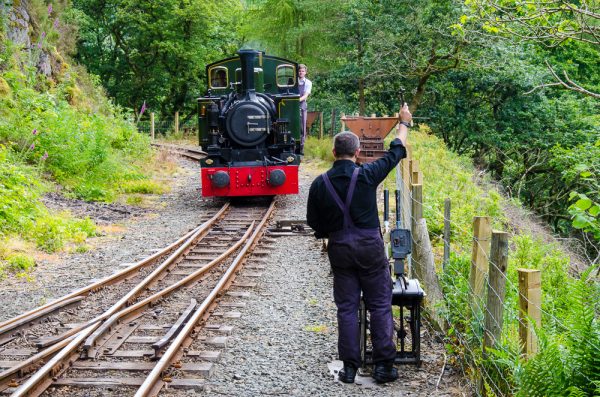
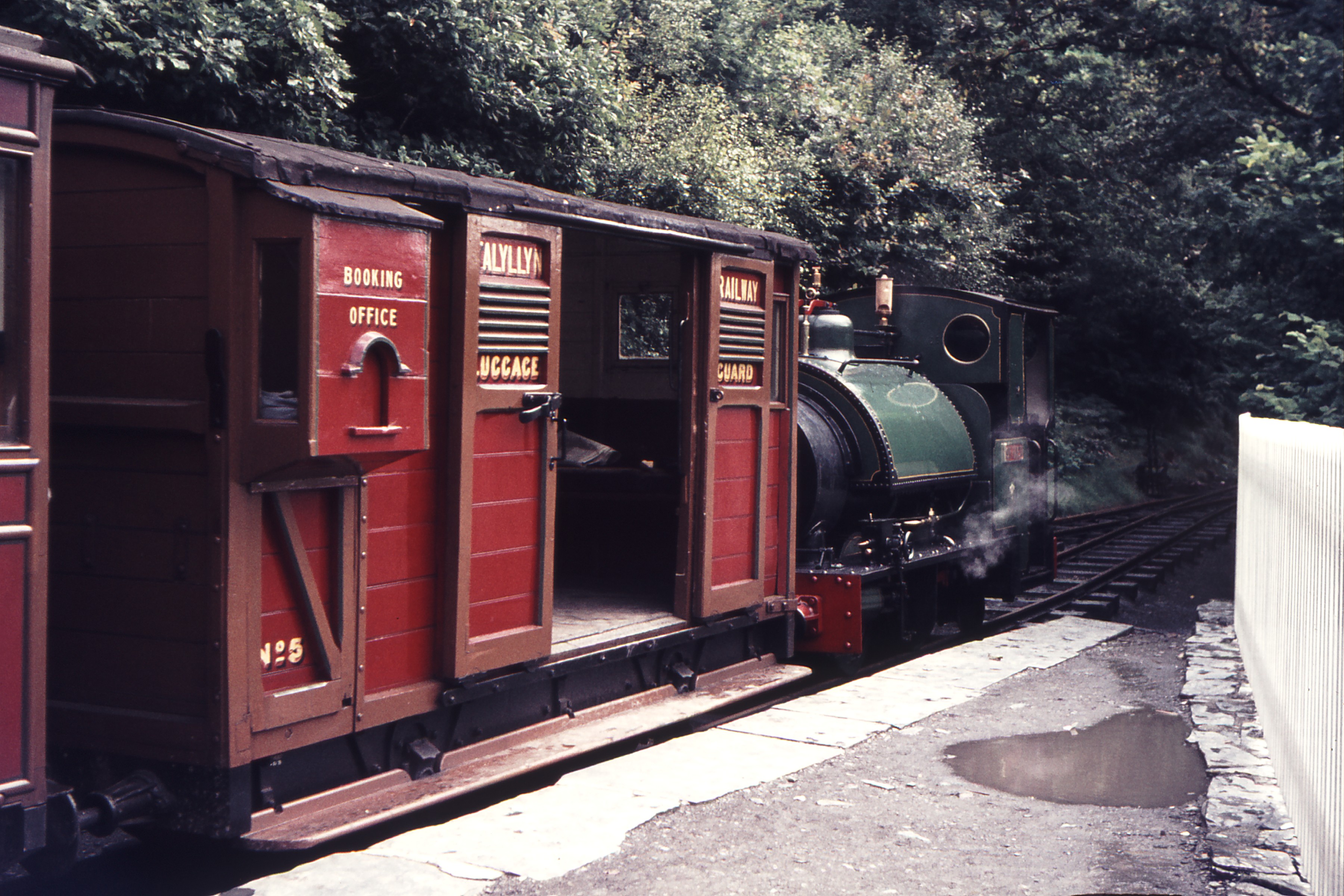
The other Welsh railway that I am basing the MQR on is the Talyllyn Railway. Unlike the Penrhyn Quarry Railway, the Talyllyn continues to run today as a tourist railway; it was sold to a group of enthusiasts in 1951. Robin and I rode it in 2014 and the photo above came from that trip.
I purchased a copy of James I. C. Boyd’s book, “The Tal-y-llyn Railway“, later on during that 2014 trip and have found it to be a great resource. Of course, the Internet also has plenty of information.
Wharf Station
This is the west end of the Talyllyn Railway. While today’s operations is heavily documented, photographs from the 1940’s and early 1950’s are relatively difficult to find. Here are two of Wharf Station in the early 1950’s. The size and scale of operations make a good fit for the MQR.


Stations Along the Line
While the Penrhyn Quarry Railway was primarily focused on moving slate, the Talyllyn had much passenger service and had some attractive small stations along the line. Brynglas is located about half way between the ends of the line and features the sole passing loop on the line.

Dolgoch is another stop along the line. It features a water tank for upbound trains as well as a very attractive viaduct over a stream.

Wordless Wednesday: 3
Source: The KDH Archive on Flickr
Wordless Wednesday: 2

Source: Expat Linguist
Wordless Wednesday: 1

Source: Daily Post UK
Design Flavour for the MQR
Now that we are back in Canada full-time and know where we will be living long-term, I’ve initiated the planning process for the 7/8″ scale Marchlyn Quarry Railway. To start, I’ve pulled together a number of photos of the prototype Penrhyn Quarry Railway for reference and flavour.
Coed-y-Parc
This was the south end of the Penrhyn Quarry Railway. Here the PQR connected with the slate quarry. Coed-y-Parc was also the location of the main slate dressing mills, the sheds for the steam engines as well as a small yard for marshalling the trains to Port Penrhyn. Coed-y-Parc featured a beautiful road bridge splitting the Coed-y-Parc yards in two. It also featured an impressive slate wall on the south side of its property that ran the length of the yard.

Hendurnpike Crossing
Hendurnpike featured a picturesque road crossing. The original crossing guard’s shed was still standing in 2013!

Tregarth
Tregrath was the location of the main passing loop about halfway between Coed-y-Parc and Port Penrhyn.
Port Penrhyn
Port Penrhyn was the north end of the PQR and where the finished slate was transferred to boats and ships for export. Port Penrhyn was also served by the standard gauge British Railway, making for some interesting trackwork.


2015-05-09 Trillium Railway North
- TRR 1842
- CNA 406240 – 50 ft boxcar
- AGR 77638- 50 ft boxcar
- GTW 406450 – 50 ft boxcar
- AGR 8108 – 50 ft boxcar
2012-05-12 Trillium Railway North
This is another interesting video of the Trillium Railway operations circa 2012. The back story is that CP was on strike at the time, preventing Trillium from using its normal interchange at Feeder. Instead interchange was done with the CN at Merritton. The video shows that all three Trillium locomotives were called into action.
Trillium Railway Detour Interchange, Merritton, May 26, 2012
The video does show the differences in traffic between the north and south parts of the railway. The south part is dominated by tank cars and covered hoppers, while north of Merritton, boxcars and gondolas are more prevalent.
Riding the Little Trains of Wales
Robin and I have just returned from two weeks in Wales where we hiked, walked around old castles and manor houses and rode four of the Great Little Trains of Wales. The four railways we rode were:
On the Llanberis Lake Railway, we rode behind “Elidir“. We used the Welsh Highland Railway to complete a hike we did from Rhyd Ddu to Beddgelert. We photographed both Garrett engines used on the WHR, numbers 138 and 143, earlier in the day when they crossed near Rhyd Ddu but rode behind no 138 back to Rhyd Ddu. On the Ffestiniog, we rode the “David Lloyd George” down from Blaneau Ffestiniog to Porthmadog and the “Earl of Merioneth” back up. Finally, on the Talyllyn, we rode behind the “Tom Rolt“.
Each trip had its own highlights, but having the opportunity to see these classic steam engines running through the Wales countryside was reward enough.
I have additional pictures from the Llanberis Lake, Welsh Highland and Talyllyn Railways on Flickr.