MQR Slab Cars – Part 2

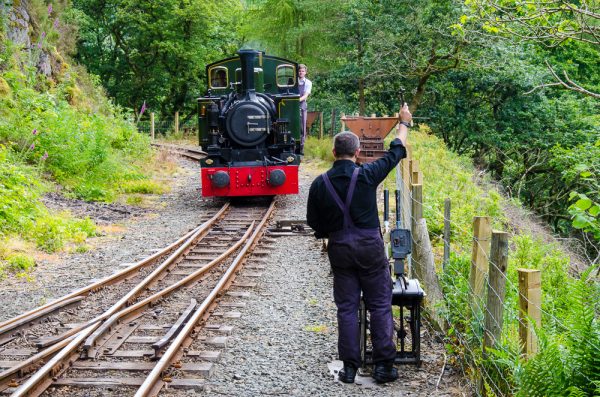
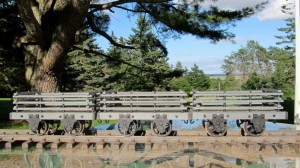
Well, it’s only taken me six plus years to get back to working on the slab cars. I’m using the following photo to guide the next steps of construction:

Photographed at the National Slate Museum (2014)

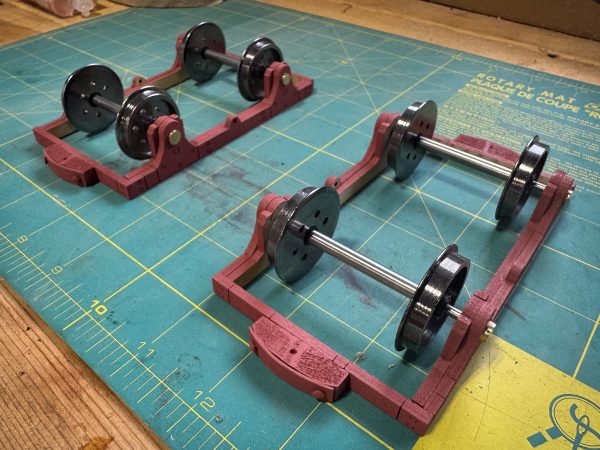
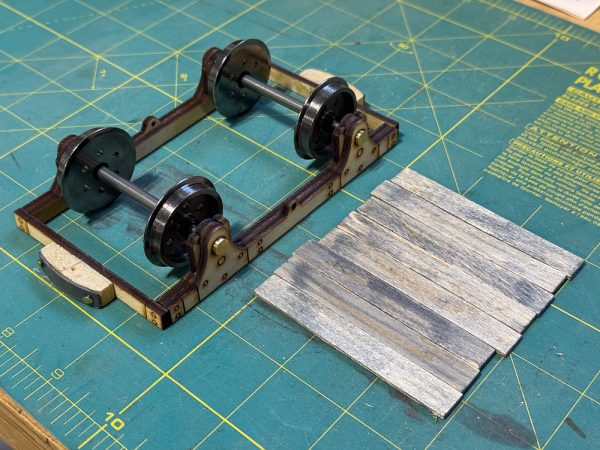
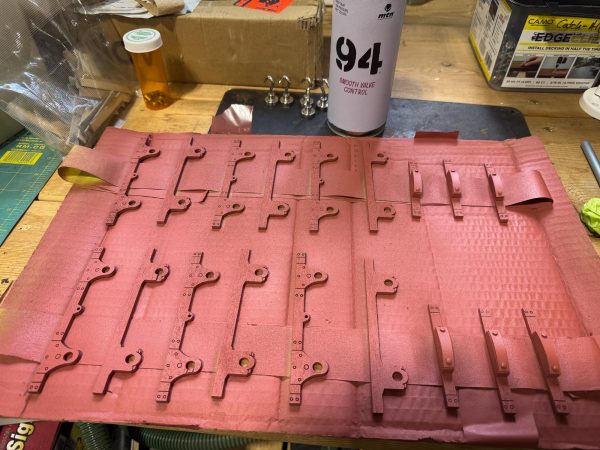
You can see from the photo below that I completed the epoxying of the buffers to the end sills. Using a round needle file, I enlarged the laser-cut holes for the brass bearing cups to get them to fit well. You can also see that I have been experimenting with Trade Secret stain markers to color the popsicle stick decking. I’ve found that the lightest colors of grey and brown are sufficiently dark to match the look of untreated wood.

Finally, some progress after 6.5 years!

Next up is paint which will be some variant of boxcar red and engine black for the hardware.

MQR Slab Cars – Part 1

Way back in 2013, I purchased a number of 7/8″ scale car kits from Acme Engineering in the UK while living in the Netherlands. Well, here it is late 2019, and only now have I had the time and space to start working on them. I purchased three slab and ten slate car kits so I thought I would start with the slab cars.

I purchased the kits with the Penrhyn-style buffers, but after reading many of Chris Bird’s articles on rolling stock (like this one on his build of the Acme slate cars), I’ve decided to go with dumb buffers for all of the MQR rolling stock going forward.

I purchased some dimensional wood from the local Michaels and ran it through my table router in which I mounted a tall ogee bit. This gave me nice wide-radius curves for the front of the buffer. I then glued the new buffers to the ends of the slab cars.

I decided to cover the face of the buffer with some plastic strip I had stored away for another long-forgotten project. And to finish it off, I used some brass pins to represent bolts holding the plastic “metal” buffer facing. Below is a photo of the buffers under construction; they still need to have the plastic and brass pins epoxied to the wood.

Slab Car Buffers in Construction

My least favorite part of the original slab car kit was the decking and so I decided to replace the decking that came with the kit with popsicle sticks to make a more interesting deck; something more like the lead photo.

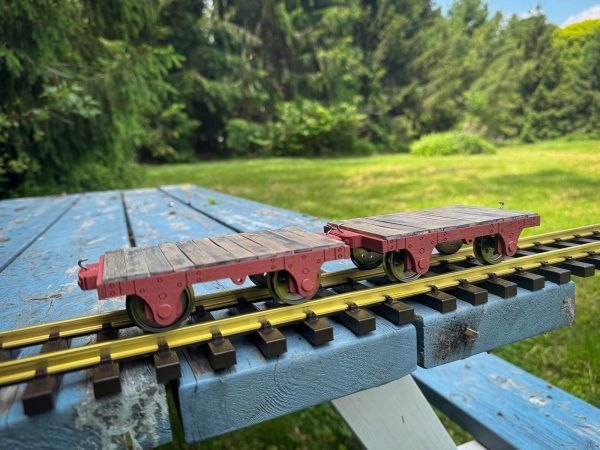
Here is the proof of concept:

Slab Car with Popsicle Stick Decking (Proof of Concept)

More to come…

More Design Flavour for the MQR

The other Welsh railway that I am basing the MQR on is the Talyllyn Railway. Unlike the Penrhyn Quarry Railway, the Talyllyn continues to run today as a tourist railway; it was sold to a group of enthusiasts in 1951. Robin and I rode it in 2014 and the photo above came from that trip.

I purchased a copy of James I. C. Boyd’s book, “The Tal-y-llyn Railway“, later on during that 2014 trip and have found it to be a great resource. Of course, the Internet also has plenty of information.

Wharf Station

This is the west end of the Talyllyn Railway. While today’s operations is heavily documented, photographs from the 1940’s and early 1950’s are relatively difficult to find. Here are two of Wharf Station in the early 1950’s. The size and scale of operations make a good fit for the MQR.

Towyn Wharf station, Talyllyn Railway with train,1953
Talyllyn Railway train at Towyn Wharf station, 1951

Stations Along the Line

While the Penrhyn Quarry Railway was primarily focused on moving slate, the Talyllyn had much more passenger service and some attractive small stations along the line. Brynglas is located about half way between the ends of the line and features the sole passing loop on the line.

Brynglas station, Talyllyn Railway, 1951

Dolgoch is another stop along the line. It features a water tank for upbound trains as well as a very photogenic viaduct over a stream.

Dolgoch station with train, Talyllyn Railway, 1951

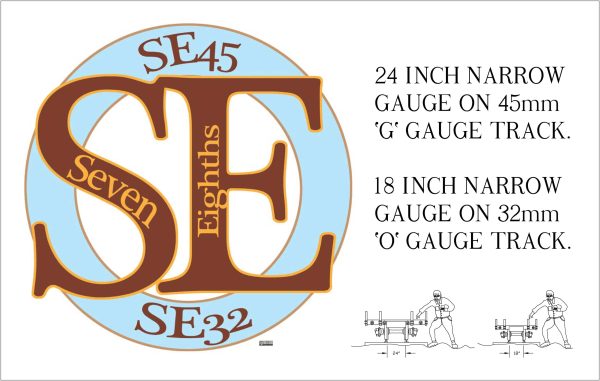
Inspirational 7/8″ Scale Railways

My previous garden railway provided me a lot of enjoyment over its four-year life. It was simple in design, quick to construct, easy to maintain and quick to dismantle when we finally moved. It was a great first outdoor layout for me but as I look to design and build the MQR, I am planning on setting my sights higher.

I’ve been a member of the 7/8″ scale forum, The SE Lounge, since 2007. Over the years, members have documented the creation and development of their layouts.  Here are three that have captured my imagination and will provide inspiration for the MQR design.

Rich Chiodo’s Isle of Shoals Tramway

If you are not familiar with Rich’s layout, I strongly encourage to go through all 23 pages of the post linked above. The IST is a wonderfully executed garden railway that fully captures British narrow gauge.

Things I like about the IST:

  1. The brick tub supporting and surrounding the IST is just gorgeous; it creates a nice edge which photographs well. However, Rich mentioned that it took a long time to construct. 30″ feels about the right amount of elevation to design for.
  2. Rich’s design allows access to all parts of the layout.
  3. Low track-to-scenery ratio.
  4. Very simple track work: wide curves, little straight track, 5 switches in total.

Things I’d do differently:

  1. I would like to have the option to run both point-to-point and continuously.
  2. I am on the fence when it comes to the “pit”. It is a sunken area in the middle of the layout where people can sit and enjoy the layout from a different angle.

Chris Bird’s Summerlands Light Railway

Chris has documented his layout extensively on YouTube.

Things I like about the SLR:

  1. Once again, a very simple track work: wide curves, little straight track, 6 switches in total.
  2. Many small scenes that photograph or video well and make the layout seem much bigger than it is.
  3. Because Chris has included a reserve loop, he can run the SLR in an out-and-back configuration.
  4. The layout is elevated along the main operating side; looking at photographs, I would estimate the elevation difference to be about 15-18″.

Things I’d do differently:

  1. I’m unlikely to have tunnels on the MQR.
  2. No passing loop on the mainline.

Rob Bennett’s Weston Railway

Rob Bennett is another well-known 7/8″ scale modeler from the UK. As I understand it, his Weston Railway was originally at ground level but was elevated in the late 2000’s. I mostly seen Rob’s layout through the various YouTube videos he has made.

Things I like about the Weston:

  1. The two sets of spurs running off to the lower right give Rob the option of running point-to-point. They also serve as steam-up bays.

Things I’d do differently:

  1. The Weston is quite a bit more complicated in track design compared to the IST and SLR: I count 16 switches in Rob’s diagram. I expect the MQR design to come in around 10 switches maximum.

Design Flavour for the MQR

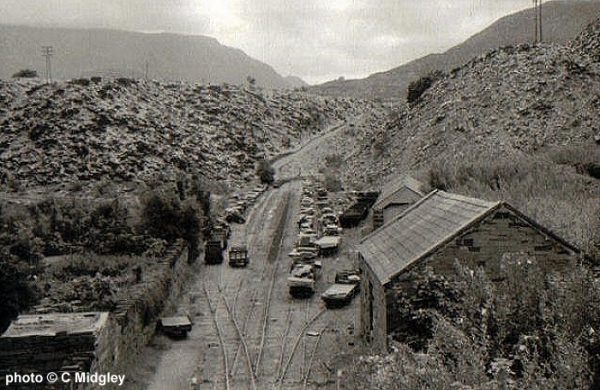
Now that we are back in Canada full-time and know where we will be living long-term, I’ve initiated the planning process for the 7/8″ scale Marchlyn Quarry Railway. To start, I’ve pulled together a number of photos of the prototype Penrhyn Quarry Railway for reference and flavour.

Coed-y-Parc

This was the south end of the Penrhyn Quarry Railway. Here the PQR connected with the slate quarry.  Coed-y-Parc was also the location of the main slate dressing mills, the sheds for the steam engines as well as a small yard for marshalling the trains to Port Penrhyn. Coed-y-Parc featured a beautiful road bridge splitting the Coed-y-Parc yards in two. It also featured an impressive slate wall on the south side of its property that ran the length of the yard.

Coed-y-Parc Bridge and Wall, unknown date
Felin Fawr 1962
Felin Fawr 1962

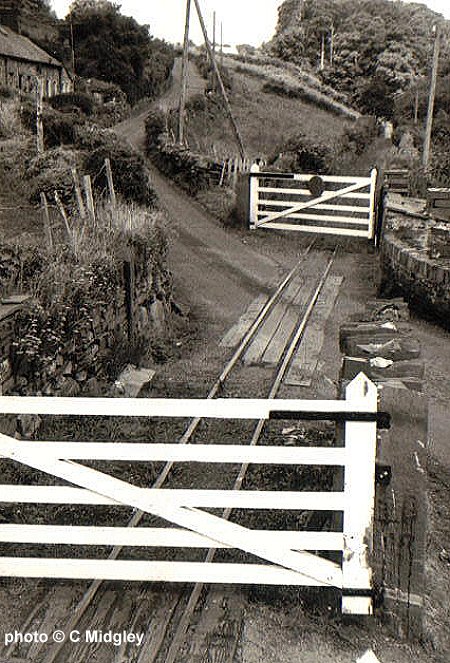
Hendurnpike Crossing

Hendurnpike featured a picturesque road crossing. The original crossing guard’s shed was still standing in 2013!

Hendurnpike Crossing 1962
Hendurnpike Crossing, 23rd February 2013

Tregarth

Tregrath was the location of the main passing loop about halfway between Coed-y-Parc and Port Penrhyn.

Tregarth Passing Loop, 1963

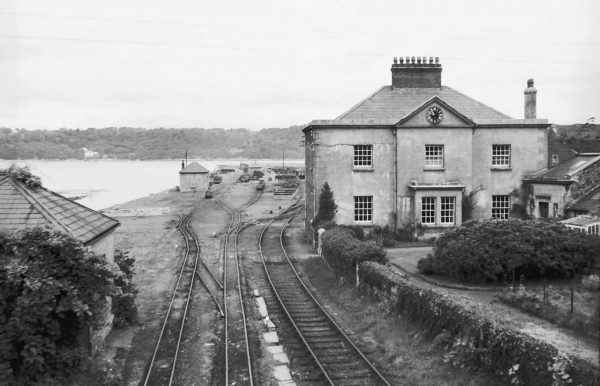
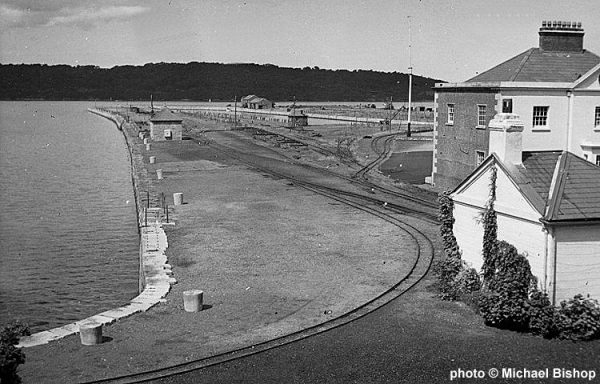
Port Penrhyn

Port Penrhyn was the north end of the PQR and where the finished slate was transferred to boats and ships for export. Port Penrhyn was also served by the standard gauge British Railway, making for some interesting trackwork.

Port Penrhyn 1961
Port Penrhyn 1961
Port Penrhyn 1963
Port Penrhyn 1963

Back Story on the Marchlyn Quarry Railway

7/8″ Scale Live Steam Engine – Oakshaak

After reviewing my last few posts here at Trains @ Station Studios, I realized that while I talked a lot about engines and rolling stock, I have not done a good job of explaining the back story of the Marchlyn Quarry Railway. So let’s fix that now.

I first ran across the narrow gauge slate railways of Wales back in 1988. I lived in London, England for three years in the late 1980’s and my cousins from Canada visited for a couple of weeks. While we spent a lot of time seeing the sights in London, we rented a car and drove to Wales for a week. We started in the south of Wales in the Brecon Beacons area and made our way north. When I learned that there was a narrow gauge railway running down from the hills at Blaenau Ffestiniog to the seaside at Porthmadog, I convinced the others that we had to go for a ride on it. It was a memorable experience.

After I returned to Canada, my modelling interests moved onto other things like the PM&TCo. But as I started to get more and more interested in garden and live steam railways when we lived in Texas, it was not long before I was coming across the Great Little Trains of Wales and the myriad of opportunities to use them as a theme for my next garden railway. My purchase of a 7/8″ scale live steam engine and three slate cars back in 2011 sealed the deal.

I thought about going pretty much fully freelance in the design but have always liked basing my model railroads closely on real prototypes. So I started to investigate the various slate railways that ran into the 1950’s. The most well-known four were:

  1. the Ffestiniog Railway
  2. the Talyllyn Railway
  3. the Padarn Railway
  4. the Penrhyn Quarry Railway

I made the following Google Map to show where each of these railways where and the slate quarries each of them served (you can expand the map to full screen and zoom in to see the details more closely):

There is much to recommend to use any of the four as a basis for a garden railway, but in the end I think the Penrhyn Quarry Railway had the most interesting combination of operations, engines, rolling stock and buildings. To give myself some room to take inspiration from the other three railways, I chose not to use the Penrhyn Quarry name. Instead during my research I found that there was a short-lived slate quarrying operation lying just to the south of the main Penrhyn quarry. It was named the Marchlyn Quarry and so I chose to use it as the name of my 7/8″ scale railway.

So there you go: the back story to the Marchlyn Quarry Railway. There are several good online resources on the Penrhyn Quarry Railway which I’ll share in the next few weeks.

Rolling Stock for the MQR

After returning from the OnTraXS 2013 model railway show, I started to think about doing some modeling again. I have been putting off some decisions until the eminent decision of where my next assignment will be, but decided last week to just get on with things.

I placed an order with Acme Engineering for a set of Welsh-style rolling stock including ten slate wagons, three slab cars and one workman’s coach:

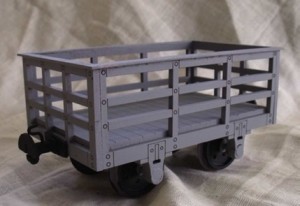
Acme Engineering Penrhyn Slate Wagon

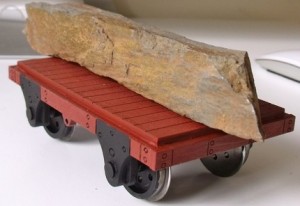
Acme Engineering Slate Slab Car

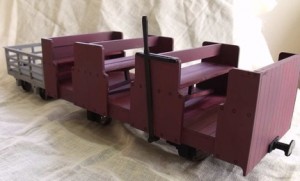
Acme Engineering Penrhyn Open Workman Car
Acme Engineering Penrhyn Open Workman Coach

Added to the three slate wagons purchased back in 2011, I now have a decent sized roster of rolling stock for my 7/8n2 garden railway:

Slate Wagons
Slate Wagons

Now all I need to do is set up a workbench to build them all.

New (to me) 7/8″ Scale Engine

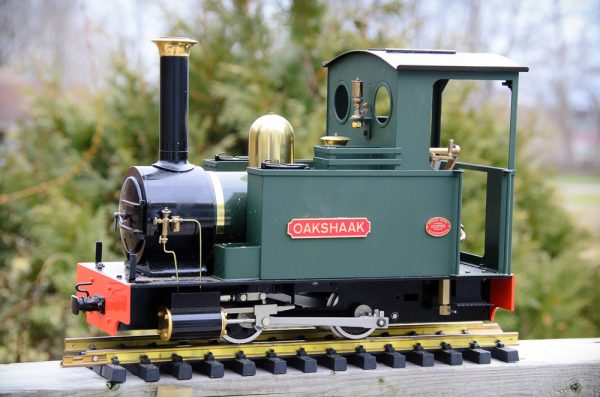
7/8″ Scale Live Steam Engine – Oakshaak

I was fortunate this weekend to surf over to the SE Lounge website and caught sight of a “for sale” announcement for a 7/8″ scale live steam locomotive and some rolling stock. The seller was Canadian and so I made contact and made arrangements to purchase it all. The photo above shows the engine, a Simply 7/8ths Baldrig kit on a Accucraft Eldrig chassis. The previous owner named it “Oakshaak” after the name used by the ancient Mi’kmaq for the New Brunswick town he lives in.

I also got three slate wagons as part of the deal:

Marchlyn Slate Wagons

New Engine, New Scale

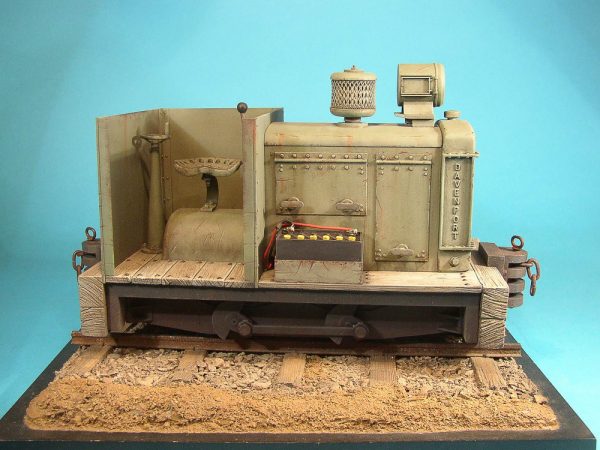
Back 2 Bay 6 7/8″ Scale Davenport

So I didn’t jump on buying the Roundhouse Katie back a year ago. Rather today I made a purchase of the 7/8″ scale Davenport made by Back to Bay 6 in the UK. I follow the SE Lounge Forum rather religiously and have always been impressed by the size and quality of the 7/8″ scale model presented there. I don’t have too much invested in 1:20.3 rolling stock at the moment and several people have kitbashed the Regner Konrad into 7/8″ scale. Here’s one example done by Rob Bennett: